Introduction
Ransomware remains one of the most dangerous cybersecurity threats for businesses, organizations, and individual users. Modern ransomware attacks are no longer limited to simply encrypting files and demanding payment. Cybercriminals increasingly combine data theft, credential compromise, network intrusion, and extortion to increase pressure on their victims.
In 2026, effective ransomware protection requires a layered security strategy. Organizations need to protect identities, endpoints, networks, cloud environments, applications, and data while continuously monitoring for suspicious activity.
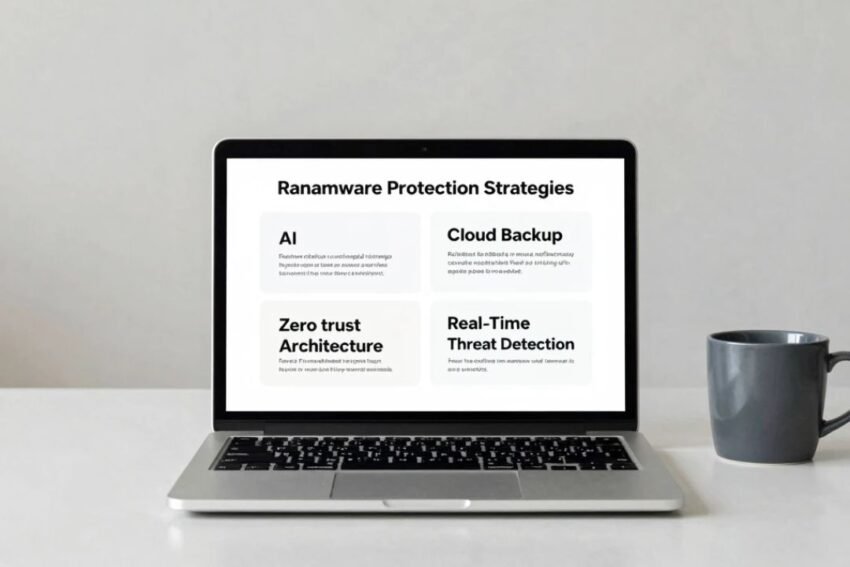
Technologies such as artificial intelligence, Zero Trust security, advanced backup systems, endpoint detection, automated threat response, and behavioral analytics are becoming increasingly important.
This guide explores the top ransomware protection strategies in 2026, including AI-powered security, secure backups, Zero Trust, employee awareness, threat detection, vulnerability management, and incident response.
What Is Ransomware Protection?
Ransomware protection refers to the technologies, security practices, policies, and procedures used to prevent, detect, contain, and recover from ransomware attacks.
A complete ransomware security strategy should address four major areas:
- Prevention
- Detection
- Response
- Recovery
Prevention attempts to stop attackers from gaining access. Detection identifies suspicious activity as early as possible. Response limits the damage, while recovery restores systems and data.
This layered approach is more effective than relying on one security product.
Why Ransomware Protection Is More Important in 2026
Cybercriminals continue to develop more sophisticated attack techniques.
Modern ransomware campaigns may involve:
- Phishing
- Stolen credentials
- Exploited vulnerabilities
- Remote-access attacks
- Data theft
- Network movement
- Double extortion
- Ransomware-as-a-Service
- Supply-chain compromise
Attackers can also use legitimate administrative tools after gaining access, making traditional malware detection more difficult.
For this reason, organizations increasingly need security systems capable of identifying unusual behavior instead of looking only for known malware signatures.
1. Use AI-Powered Threat Detection
Artificial intelligence is becoming an important part of modern cybersecurity.
AI-powered security systems can analyze large amounts of information and identify patterns that may indicate malicious activity.
For ransomware protection, AI can help detect:
- Unusual file encryption
- Abnormal login behavior
- Suspicious processes
- Large-scale file modifications
- Unexpected network activity
- Data-exfiltration patterns
- Privilege escalation
Behavior-based detection can be particularly useful because ransomware may change its code or techniques to avoid traditional signature-based defenses.
AI can help security teams prioritize suspicious events and investigate threats more efficiently.
However, AI should support security professionals rather than completely replace human oversight.
2. Build Strong and Isolated Backups
Backups remain one of the most important ransomware protection strategies.
If attackers encrypt production data, secure backups can provide a path toward recovery.
Organizations should maintain multiple copies of important information and protect those backups from unauthorized access.
Important backup practices include:
- Regular automated backups
- Offline backups
- Isolated backup environments
- Access controls
- Encryption
- Backup monitoring
- Recovery testing
A backup system connected directly to the same environment as production data may also become a target.
Therefore, backup isolation is increasingly important.
3. Use Immutable Backups
Immutable backups are designed so that stored data cannot be easily changed or deleted during a defined retention period.
This can provide additional protection against attackers who attempt to destroy backup copies.
Immutable storage can be particularly useful for critical business data.
Organizations should still test their recovery process regularly because having an immutable backup does not automatically guarantee a successful recovery.
4. Strengthen Zero Trust Security
Zero Trust is becoming a major security strategy for modern organizations.
The basic principle is that users, devices, applications, and networks should not automatically be trusted simply because they are inside a corporate environment.
Access should be continuously evaluated based on factors such as:
- User identity
- Device security
- Application
- Location
- Risk level
- Requested resource
- Authentication strength
Zero Trust can reduce the ability of ransomware attackers to move from one compromised system to another.
5. Implement Multi-Factor Authentication
Passwords alone are no longer sufficient for protecting many important systems.
Multi-factor authentication (MFA) requires additional verification beyond a password.
Organizations should prioritize MFA for:
- Email accounts
- Cloud platforms
- VPN services
- Administrative accounts
- Remote-access systems
- Security management systems
Strong authentication can significantly reduce the risk associated with stolen credentials.
6. Protect Privileged Accounts
Attackers often target accounts with elevated permissions because they can provide access to sensitive systems.
Organizations should use privileged-access security practices such as:
- Separate administrator accounts
- Least-privilege permissions
- MFA
- Privileged access management
- Administrative session monitoring
- Regular permission reviews
Employees should not use administrator privileges for everyday activities unless necessary.
7. Improve Endpoint Detection and Response
Endpoint Detection and Response, commonly known as EDR, can monitor computers and servers for suspicious behavior.
Modern EDR platforms may detect:
- Malicious processes
- Suspicious scripts
- Unusual file activity
- Credential attacks
- Persistence mechanisms
- Lateral movement
Some platforms can automatically isolate compromised devices.
This can help security teams contain ransomware before it spreads to additional systems.
8. Use Extended Detection and Response
XDR expands security visibility across multiple environments.
Instead of monitoring endpoints alone, XDR can correlate information from areas such as:
- Endpoints
- Networks
- Cloud systems
- Identity platforms
- Applications
This broader visibility can help security teams understand how an attack is progressing.
For organizations with complex environments, cross-platform detection can be valuable for identifying coordinated ransomware activity.
9. Secure Email and Phishing Protection
Phishing continues to be an important entry point for cyberattacks.
Organizations should deploy email security systems capable of identifying suspicious:
- Attachments
- URLs
- Sender identities
- Messages
- Login requests
- Files
Security awareness training should complement technical controls.
Employees should learn how to recognize suspicious emails and report them quickly.
10. Patch Vulnerabilities Quickly
Unpatched vulnerabilities can give attackers opportunities to enter systems.
Organizations should maintain an accurate inventory of hardware and software and prioritize vulnerabilities according to risk.
Important systems to patch include:
- Operating systems
- VPN appliances
- Firewalls
- Web applications
- Servers
- Network devices
- Cloud applications
- Remote-access software
Automated vulnerability-management tools can help identify systems that require attention.
11. Segment Critical Networks
Network segmentation can help limit ransomware movement.
Organizations can separate:
- User networks
- Server environments
- Backup systems
- Administrative networks
- Production systems
- Guest networks
If attackers compromise one section of the environment, segmentation can make it more difficult to access other systems.
Microsegmentation can provide even more granular access controls in modern cloud and data-center environments.
12. Secure Remote Access
Remote work has expanded the number of systems that can potentially be targeted.
Organizations should protect remote-access systems with:
- MFA
- Strong authentication
- Device verification
- Access policies
- Security monitoring
- Regular patching
Unused remote-access services should be disabled whenever possible.
13. Monitor for Behavioral Indicators
Ransomware often produces unusual activity before causing widespread damage.
Security teams should monitor indicators such as:
- Rapid file modifications
- Unusual encryption activity
- Abnormal authentication
- Unexpected administrative actions
- Large data transfers
- Suspicious scripts
- Unusual network connections
Behavioral analytics can help identify potential attacks even when the exact malware is unknown.
14. Use Automated Threat Response
Speed is critical during a ransomware incident.
Automated security systems can perform actions such as:
- Isolating endpoints
- Blocking malicious connections
- Disabling compromised accounts
- Blocking suspicious processes
- Creating security alerts
Automation can reduce response time and help prevent an attack from spreading.
However, organizations should carefully test automated responses to avoid disrupting legitimate business operations.
15. Protect Cloud Data
Cloud adoption has created new security requirements.
Organizations should protect cloud environments through:
- Strong identity management
- MFA
- Least privilege
- Encryption
- Secure configurations
- Logging
- Monitoring
- Backup protection
Cloud security should be included in the organization’s overall ransomware strategy.
16. Secure the Software Supply Chain
Modern businesses often depend on third-party applications, libraries, APIs, and cloud services.
Attackers may attempt to compromise software dependencies or trusted vendors.
Organizations should therefore evaluate:
- Third-party software
- Software dependencies
- Vendor access
- Application permissions
- Software updates
- Build environments
Software supply-chain security is increasingly important as organizations rely on interconnected technology ecosystems.
17. Protect APIs
APIs connect applications, cloud services, mobile applications, and business systems.
Poorly protected APIs can expose sensitive data or provide attackers with opportunities to access systems.
Organizations should use:
- Strong authentication
- Authorization
- Rate limiting
- Encryption
- API monitoring
- Input validation
- API inventory
API security should be integrated into broader cybersecurity and ransomware protection programs.
18. Train Employees Regularly
Technology alone cannot eliminate ransomware risk.
Employees should receive regular cybersecurity awareness training.
Training should cover:
- Phishing
- Social engineering
- Password security
- MFA
- Suspicious attachments
- Malicious links
- Safe browsing
- Incident reporting
Organizations can also conduct controlled phishing simulations to improve awareness.
The goal should be to create a security-conscious culture rather than simply blaming employees for mistakes.
19. Create an Incident Response Plan
Every organization should know what to do if ransomware is detected.
An incident-response plan should define:
- Who is responsible for response
- How compromised systems are isolated
- How evidence is preserved
- How leadership is notified
- How backups are accessed
- How systems are restored
- How customers or partners are informed when appropriate
Having a plan before an attack can reduce confusion during a crisis.
20. Test Disaster Recovery
Recovery plans should be tested regularly.
Organizations should conduct exercises to determine whether they can:
- Restore critical applications
- Recover data
- Rebuild systems
- Reestablish network services
- Operate during extended outages
Testing can identify weaknesses before a real ransomware incident occurs.
Ransomware Protection for Small Businesses
Small businesses can implement many strong security controls without building a large cybersecurity department.
A practical strategy includes:
- MFA
- Endpoint protection
- Secure backups
- Patch management
- Email security
- Employee training
- Strong passwords
- Least privilege
- Secure remote access
- Basic network segmentation
Small organizations should prioritize the systems and data that are most important to business operations.
Ransomware Protection for Individuals
Individuals can also take important steps to reduce ransomware risk.
Users should:
- Keep operating systems updated.
- Use security software.
- Enable MFA.
- Avoid suspicious links.
- Do not open unexpected attachments.
- Back up important files.
- Use strong, unique passwords.
- Keep browsers updated.
- Download software from trusted sources.
Personal backups can be particularly useful for protecting important photographs, documents, and other files.
Ransomware Protection and AI Security
AI is creating both opportunities and challenges in cybersecurity.
Security teams can use AI to analyze large datasets, identify unusual behavior, prioritize alerts, and automate certain responses.
At the same time, attackers may use AI to create more convincing phishing messages, automate reconnaissance, or improve social-engineering campaigns.
This means organizations need to use AI defensively while also preparing for AI-assisted attacks.
Ransomware Protection Challenges in 2026
Despite improved security technology, ransomware defense remains difficult.
Major challenges include:
Increasing Attack Complexity
Modern attacks may involve several stages instead of simple malware delivery.
Human Error
Employees can still fall victim to phishing and social engineering.
Legacy Systems
Older systems may be difficult to patch or replace.
Cloud Complexity
Hybrid and multi-cloud environments can make security management more difficult.
Alert Overload
Security teams may receive large numbers of alerts and struggle to identify the most important threats.
Skills Shortages
Organizations may lack enough experienced cybersecurity professionals.
Ransomware Protection Best Practices for 2026
Organizations should prioritize a layered strategy based on several core principles:
- Protect identities with MFA.
- Apply least privilege.
- Use Zero Trust principles.
- Maintain secure and isolated backups.
- Test recovery regularly.
- Deploy EDR or XDR.
- Monitor user and system behavior.
- Patch critical vulnerabilities quickly.
- Segment networks.
- Secure remote access.
- Train employees.
- Protect cloud environments.
- Monitor APIs and applications.
- Secure software supply chains.
- Automate appropriate security responses.
- Maintain an incident-response plan.
The Future of Ransomware Protection
Ransomware defense is likely to become more automated and intelligence-driven.
Future security systems may increasingly combine:
- AI threat detection
- Automated response
- Behavioral analytics
- Identity security
- Zero Trust
- Immutable backups
- Cloud security
- Continuous monitoring
- Automated vulnerability management
- Advanced network segmentation
Organizations will also increasingly focus on cyber resilience.
Instead of asking only, “How do we prevent ransomware?” security teams will also ask, “How quickly can we detect, contain, and recover from an attack?”
This shift can make organizations more prepared for evolving threats.
Conclusion
Ransomware protection in 2026 requires a comprehensive cybersecurity strategy.
AI-powered threat detection, secure backups, Zero Trust, MFA, endpoint protection, network segmentation, vulnerability management, employee training, and automated response can work together to reduce ransomware risk.
No individual technology can provide complete protection. Strong security comes from combining multiple defensive layers and regularly testing whether those defenses actually work.
Organizations should also prepare for recovery. Secure and isolated backups, disaster-recovery planning, and incident-response exercises can significantly improve resilience when prevention fails.
As ransomware attacks continue to evolve, businesses that combine AI, backup protection, Zero Trust, threat detection, identity security, and security awareness will be better positioned to protect their systems and recover from cyber incidents.
The most effective ransomware strategy is not simply to prevent every attack. It is to make attacks harder to execute, detect them quickly, limit their spread, protect critical data, and restore operations as safely and efficiently as possible.